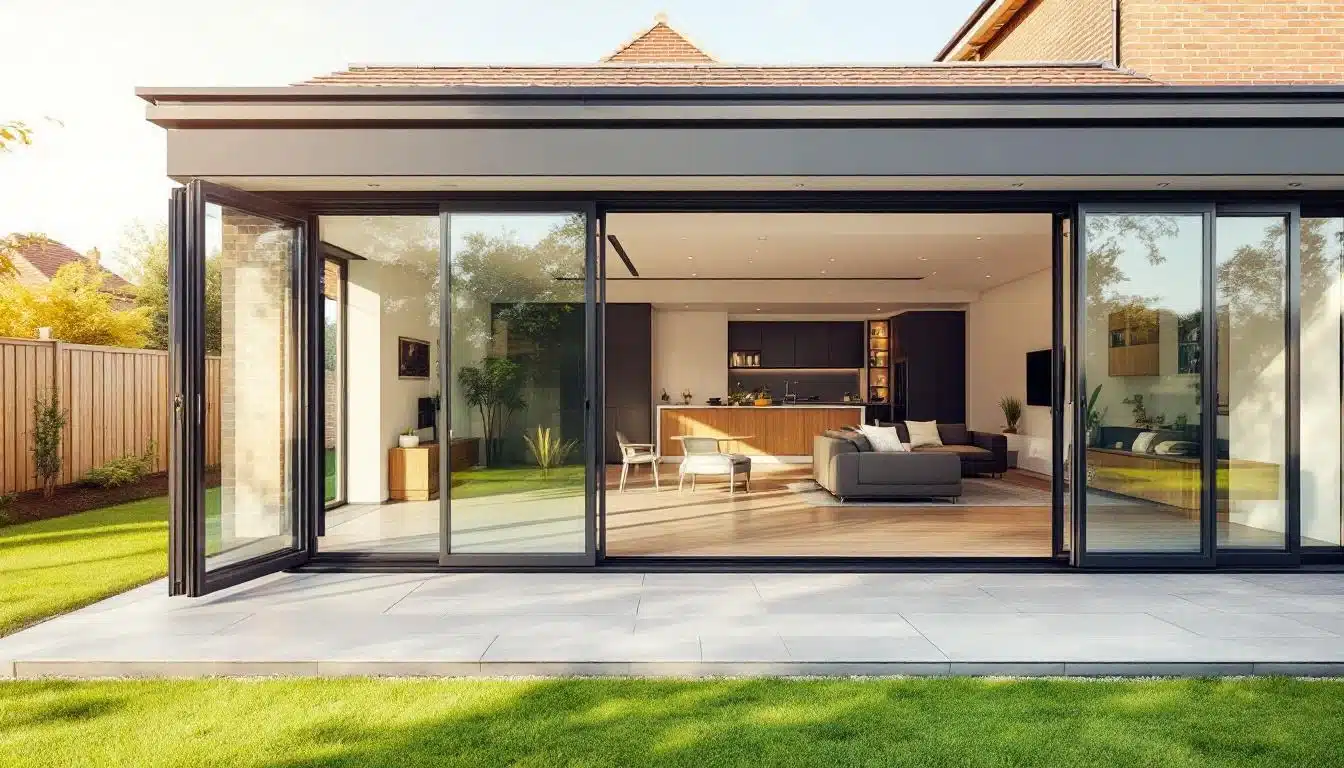
Ground Floor Extensions That Create Seamless Flow Between Indoors And Outdoors
Ground floor extensions are one of the most effective ways to transform how your home functions. At Cameron Construction, we’ve seen firsthand how the right extension removes barriers between your living spaces and outdoor areas.
When designed properly, these additions don’t just add square metres-they fundamentally change how your family lives and entertains. This guide walks you through what makes ground floor extensions work so well in Melbourne homes.
How Ground Floor Extensions Create Better Living Space
The Problem Most Melbourne Homes Face
Ground floor extensions solve a problem that plagues most Melbourne homes: disconnected living zones. Kitchens sit isolated from dining and living areas, and outdoor spaces feel like an afterthought rather than an extension of daily life. A properly designed ground floor extension eliminates these barriers. When you extend at ground level, you create one cohesive living environment instead of fragmented rooms. This matters because homeowners with open-plan, connected living spaces report higher satisfaction with their homes than those with compartmentalised layouts.
How Light and Sightlines Transform Your Space
Natural light becomes abundant when you remove internal walls and add large windows facing north or east, reducing your reliance on artificial lighting during daylight hours. The flooring flows seamlessly from kitchen tile to outdoor paving, your ceiling height remains consistent from the existing house through the extension to the covered outdoor area, and sightlines extend uninterrupted to your garden or entertaining space. This continuity is not merely aesthetic-it actually makes your home feel larger than the square metres added, because your eye travels further without obstruction.
Practical Benefits for Daily Living
Kitchen and dining areas positioned to face outdoor entertaining zones mean you prepare meals, dine, and supervise children or guests in the garden without isolation. Summer entertaining becomes effortless because you move between connected rooms rather than shuttling between disconnected spaces. Winter functionality improves too, because the extension captures northern sun that warms your living areas while large sliding doors allow you to close off the space if needed. Position your extension so the main living zone has direct sightlines to the most useful part of your garden-whether that’s a deck, lawn, or landscaped area.
Materials and Design Details That Matter
Ceiling heights aligned between your existing house and new extension prevent awkward visual transitions that make spaces feel cramped or disjointed. Consistent materials reinforce the sense that these are one continuous space, not separate zones (polished concrete, timber, or large-format tiles work well). Council requirements in Melbourne do mandate setbacks and building height limits that affect design, but experienced designers work within these constraints to maximise flow rather than compromise it. The investment in a well-planned ground floor extension pays dividends in daily living quality, entertaining capability, family function, and resale appeal.
These design principles form the foundation of successful extensions, but translating them into reality requires understanding how Melbourne’s planning system shapes what you can actually build.
Windows, Doors, and Flooring That Actually Work
North-Facing Glazing and Summer Shading
North-facing glazing captures winter sun and reduces heating costs, but you must control summer heat gain through external shading. Install operable louvres, roller blinds, or pergolas on the north side to block high summer sun while allowing low winter sun to penetrate. This strategy works because the sun’s angle changes dramatically between seasons-low in winter, high in summer-so fixed shading cannot achieve both goals simultaneously. East and west-facing windows need aggressive shading because morning and afternoon sun create uncomfortable heat that air conditioning must counteract.
Door Placement and Threshold Design
Large sliding doors work best when positioned to face your primary outdoor entertaining area, not toward a side fence or street. The size of your sliding doors matters significantly: doors wider than 2.4 metres require mid-rail support, which interrupts sightlines and costs more. Most extensions perform better with multiple narrower door sets that open the space without structural complexity.
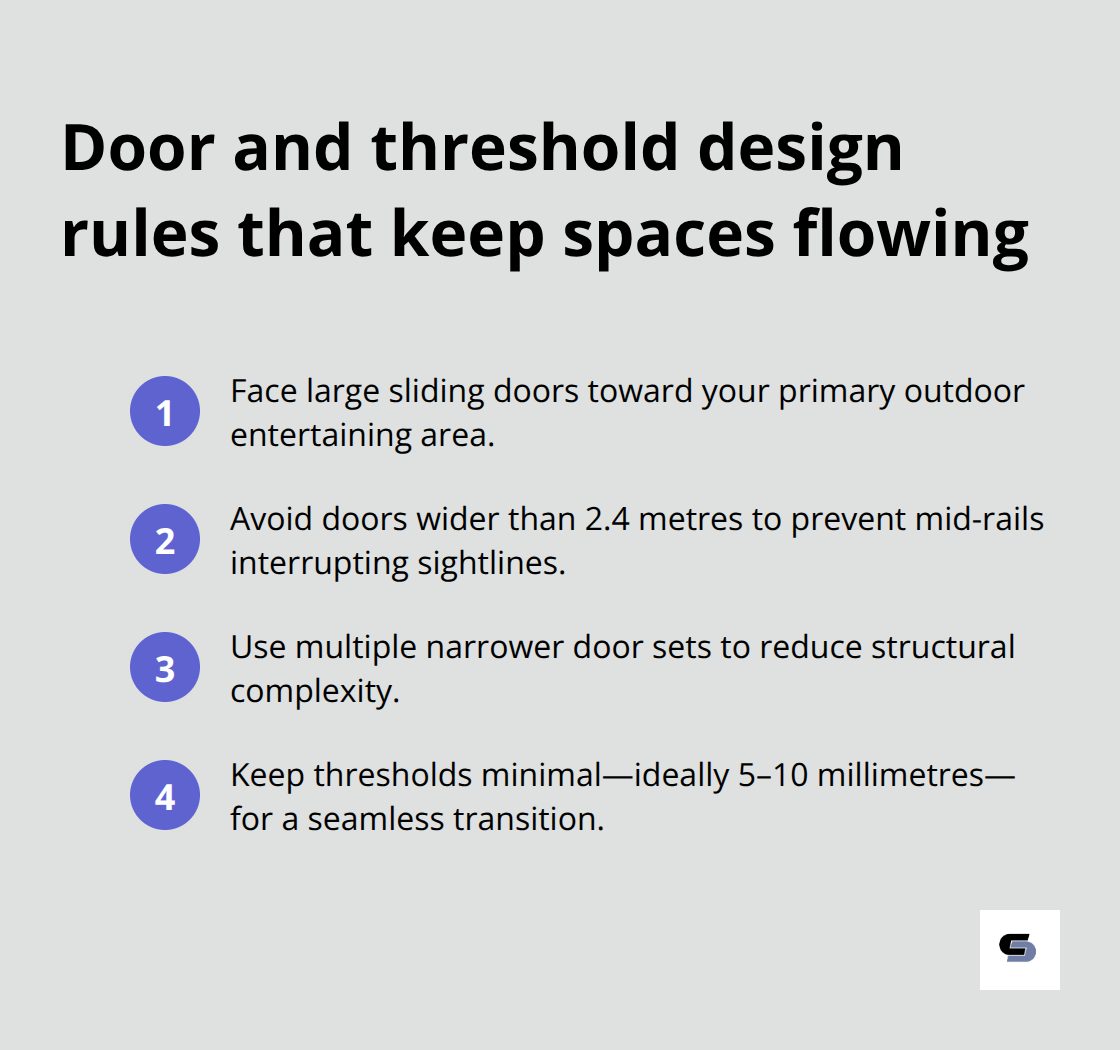
The threshold itself should be minimal-ideally no higher than 5–10 millimetres-because anything taller creates a visual and physical barrier that breaks the sense of flow between inside and outside.
Flooring Materials That Perform
Flooring materials must transition logically between inside and outside. Polished concrete or large-format porcelain tiles work well because they’re durable, easy to clean, and visually continuous from interior to exterior. Timber flooring looks warm indoors but requires careful weatherproofing at the threshold and won’t perform well if exposed to rain. Thermal mass in flooring-polished concrete, sealed masonry, or stone-can improve your extension’s energy performance when used appropriately. This approach supports better thermal comfort and lower heating and cooling costs year-round.
Ceiling Heights and Roof Alignment
Consistent ceiling heights between your existing house and extension prevent the new space from feeling cramped or disconnected. If your current ceiling is 2.7 metres, maintain that height through the extension rather than dropping to 2.4 metres to reduce construction cost. A lower ceiling creates a subconscious impression that you’ve entered a separate, lesser space. Roof lines matter too: your extension’s roof should align with the existing roof pitch and height, not sit awkwardly below or above it. This alignment costs more upfront but prevents your extension from looking like a cheap add-on.
Working Within Melbourne’s Planning Constraints
Council setback requirements and building height limits in Melbourne constrain what’s possible, but experienced designers work within these constraints to maximise visual continuity rather than compromise it. The investment in thoughtful material selection and spatial alignment pays dividends because your extension becomes one cohesive space rather than a visibly bolted-on addition. These design decisions-window orientation, door placement, flooring continuity, and ceiling alignment-form the technical foundation of seamless flow, but they only succeed when paired with a planning and building strategy that navigates Melbourne’s regulatory environment.
How to Navigate Permits, Design, and Budgeting for Your Extension
Melbourne’s Building Permit Requirements
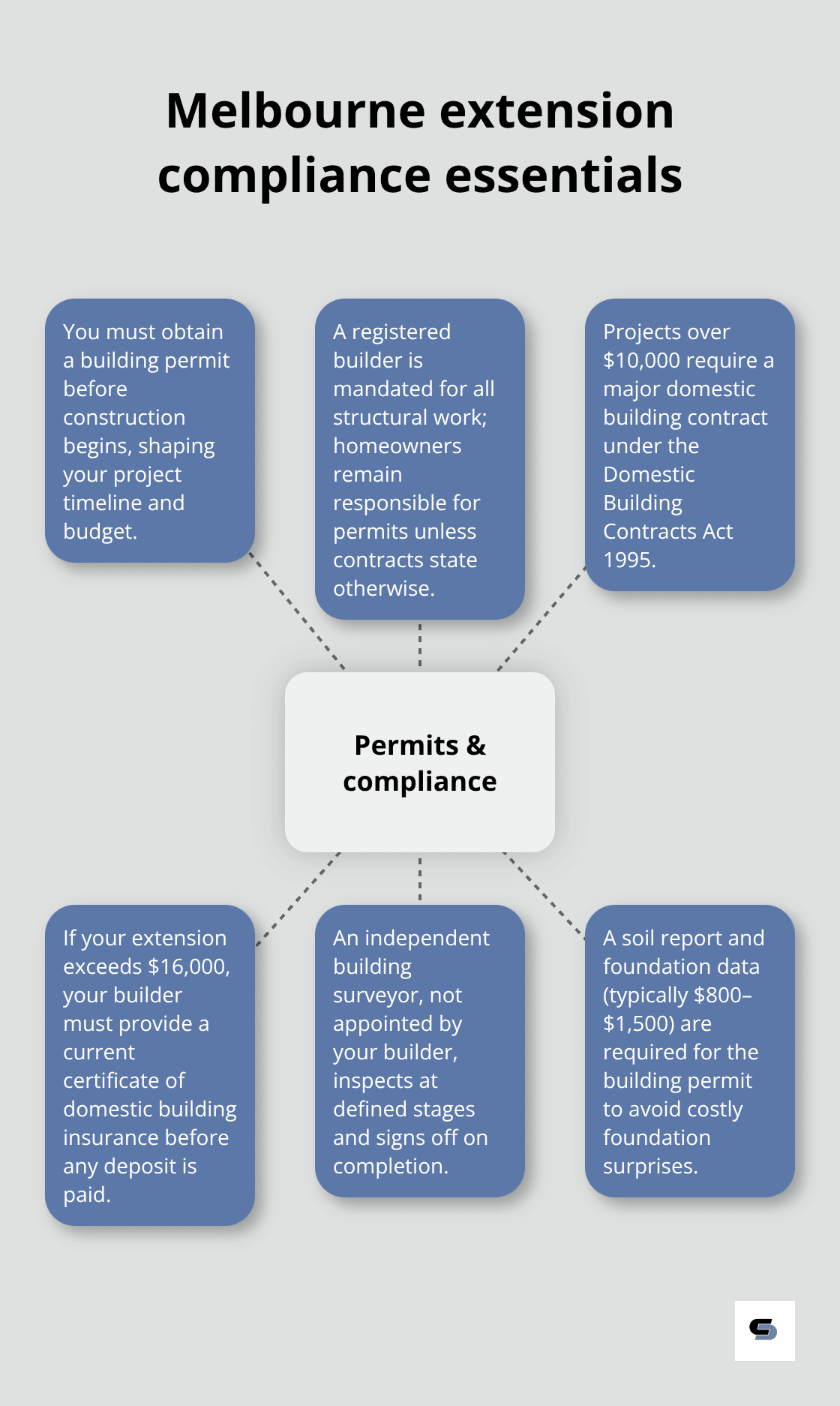
Melbourne’s planning system requires you to obtain a building permit before construction starts, and this process shapes your entire project timeline and budget. The Building and Plumbing Commission mandates that a registered builder complete all structural work, and you as the homeowner remain responsible for obtaining planning and building permits-though your designer or builder can handle this on your behalf if your contract specifies it clearly. Projects costing more than $10,000 require a written major domestic building contract under the Domestic Building Contracts Act 1995, and if your extension exceeds $16,000, your builder must provide a current certificate of domestic building insurance before you pay any deposit.
Engaging the Right Design and Engineering Team
Many Melbourne homeowners underestimate how council setback requirements and height limits constrain design options, so you should engage a designer early who understands your specific council’s planning scheme rather than discovering constraints halfway through design. Your design and engineering team should include a building designer or architect, a structural engineer, and ideally an independent building consultant to verify plans before construction begins. A soil report and foundation data is a requirement of a building permit, so budget for a geotechnical engineer’s assessment upfront (this typically costs $800–$1,500 but prevents costly foundation surprises later). An independent building surveyor-never one appointed by your builder-must inspect your work at defined stages and sign off on completion, giving you impartial verification that the work meets standards.
Protecting Your Investment Through Contracts and Quotes
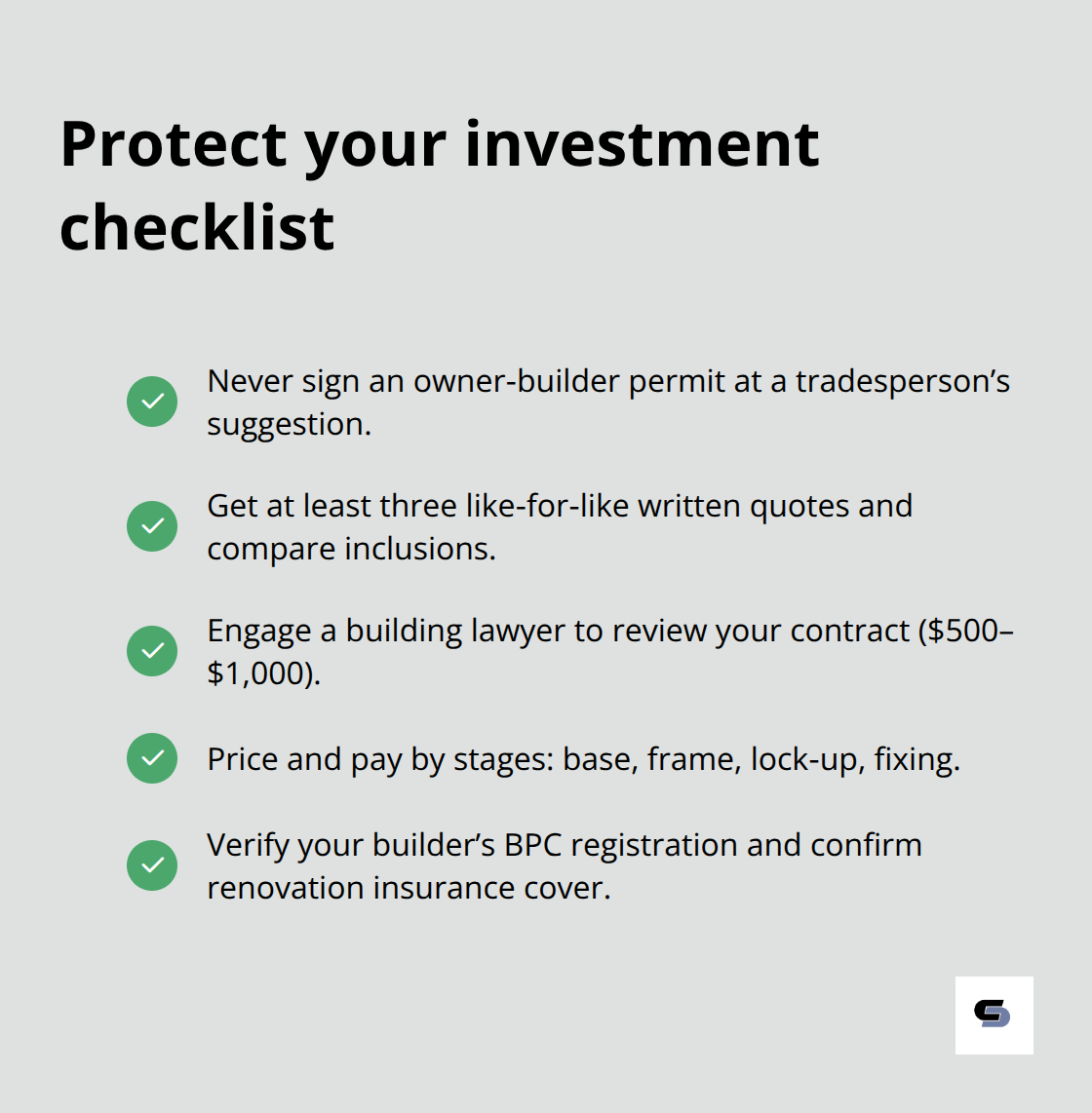
Do not sign an owner-builder permit even if a tradesperson suggests it, because this shifts responsibility and costs onto you and invalidates builder protections. Obtain at least three written quotes on identical plans and specifications, clearly understanding what differs between each bid and why; vague items like prime cost or provisional sums blow budgets during construction. Your building team should also include a building lawyer who reviews your contract before you sign (this costs $500–$1,000 but prevents expensive disputes later and is recommended even if it shortens cooling-off rights). Price work by defined stages-base, frame, lock-up, fixing-and pay only when you’re satisfied each stage is complete; this staged approach protects your investment and gives you leverage if quality issues emerge.
Verifying Your Builder and Insurance Coverage
Check your builder’s registration with the BPC, verify their business history with ASIC, and look for any legal or disciplinary actions on Consumer Affairs Victoria or VCAT websites before committing. Verify that your home and contents insurance covers renovations; you may need extra cover for the extension period (this detail is often overlooked until problems occur). Cameron Construction holds 40+ years of award-winning delivery across Melbourne’s councils, with in-house designers, engineers, and project managers who handle concept to completion, including planning, permits, and BCA compliance.
Final Thoughts
Ground floor extensions deliver measurable improvements to how your home functions and how your family lives. The seamless flow between indoors and outdoors transforms entertaining, daily routines, and your home’s appeal to future buyers. When designed with proper sightlines, aligned ceiling heights, consistent materials, and strategic window placement, these additions feel like a natural expansion of your existing home rather than a bolted-on afterthought.
The technical details matter enormously. North-facing glazing with external shading, minimal thresholds, and flooring that transitions logically from interior to exterior all contribute to that sense of continuity. Your builder and design team shape whether your ground floor extension actually delivers on its promise-a registered builder with structural expertise, an independent building surveyor who verifies quality at each stage, and a building lawyer who reviews your contract before you sign are not optional extras but the foundation of a project that works.
Staged payments tied to completed work, written quotes on identical specifications, and verification of your builder’s registration with the BPC protect you from the disputes and cost blowouts that plague poorly managed extensions. If you’re ready to explore how a ground floor extension can transform your home, Cameron Construction brings 40+ years of award-winning delivery across Melbourne’s councils, with in-house designers, engineers, and project managers who handle concept to completion, including planning, permits, and BCA compliance.


![Heritage Extensions That Respect Original Character [Guide]](https://www.cameronconstruction.com.au/wp-content/uploads/emplibot/heritage-extensions-hero-1772691912-150x150.webp)