
Extension Builders Who Deliver Fixed Price Contracts You Can Trust
Home extension projects can spiral into budget nightmares when builders won’t commit to fixed pricing. We at Cameron Construction have seen too many Melbourne homeowners blindsided by unexpected costs halfway through construction.
Extension builders who offer fixed price contracts remove that uncertainty entirely. You know exactly what you’ll pay, when the work finishes, and what quality you’ll receive.
Why Fixed Price Contracts Protect Your Budget
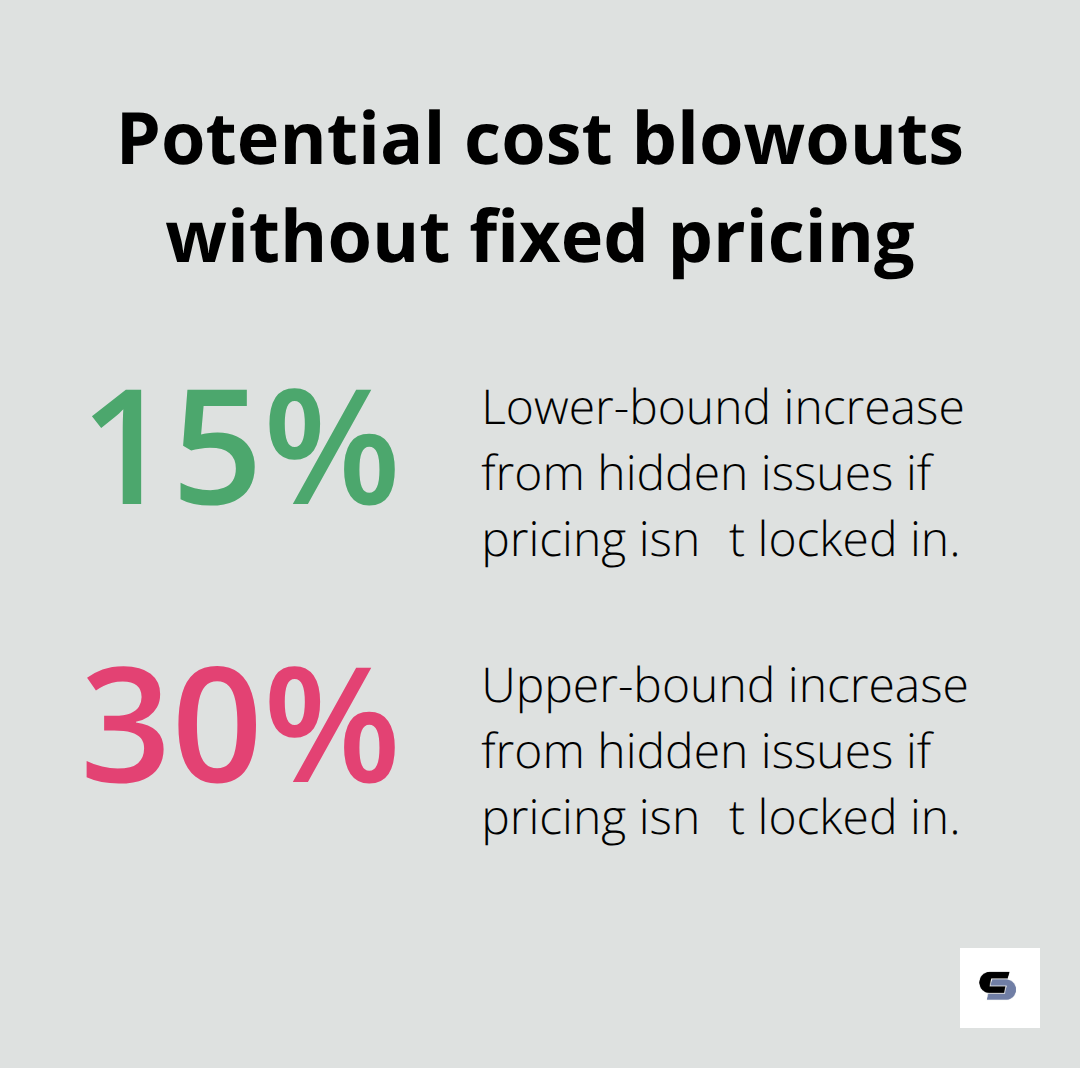
In Victoria, the Domestic Building Contracts Act 1995 requires written contracts for major domestic building work over $10,000, but many homeowners still sign agreements without understanding what protects them financially. A fixed price contract removes the guesswork entirely. You pay the agreed amount, nothing more, regardless of material cost fluctuations or unforeseen site conditions. This matters because extension work regularly encounters hidden issues-unsuitable soil, outdated electrical systems, or structural complications-that can inflate costs by 15 to 30 per cent if your contract doesn’t lock in pricing. Cost certainty gives homeowners genuine peace of mind rather than false promises.
What Gets Locked Into Fixed Pricing
A proper fixed price contract must itemise all costs separately: the building fee, planning permit fees, lodgement fees, inspection fees, and relevant government levies. These levies vary with total contract cost and should be confirmed with your building surveyor before signing. The contract should also specify which elements are fixed and which are variable-for instance, prime cost items (materials you select) and provisional sums (estimates for contingencies) typically allow adjustments, but the builder’s labour and overhead must remain fixed. This distinction matters enormously. If a contract simply states a total price without breaking down components, you have no protection when the builder claims unforeseen costs. Demand that your builder provide a detailed cost breakdown before you commit. Consumer Affairs Victoria advises keeping thorough records of all communications and invoices, which strengthens your position if disputes arise over what was or wasn’t included in the quoted price.
Hidden Fees Disappear with Transparency
Builders who refuse to itemise costs often hide charges in vague line items or claim they cannot predict expenses accurately. This is false. Licensed, experienced extension builders forecast costs reliably because they understand Melbourne’s building requirements, council approval timelines, and material lead times. If a builder tells you they cannot provide a fixed price, question their competence or their honesty. The contract must state the effective date, start and finish dates, detailed plans and specifications, fittings, the variation process for changes, labour costs, insurance and warranty details, and cancellation terms. When all these elements are explicit, surprise charges vanish. Changes to scope trigger a formal variation process with written approval and cost adjustment before work proceeds, not invoices after the fact. This protects both you and the builder, creating accountability on both sides.
How Unforeseen Conditions Affect Fixed Pricing
Extension projects across Melbourne frequently uncover site conditions that builders did not anticipate during the initial quote. Unsuitable soil, asbestos in older homes, or structural defects can emerge once excavation or demolition begins. Your contract should address this reality by distinguishing between conditions the builder could reasonably have identified beforehand and genuine surprises. Homeowners should not pay extra for foundation issues that the builder should have identified from foundation data; request and review foundation documentation up front. A well-drafted fixed price contract allocates responsibility clearly: the builder absorbs costs for conditions they should have discovered, while you cover costs for truly unforeseeable circumstances. This balance protects both parties and prevents disputes over who bears the financial burden when the unexpected occurs.
How to Verify a Builder’s Credentials and Track Record
Check Registration and Insurance First
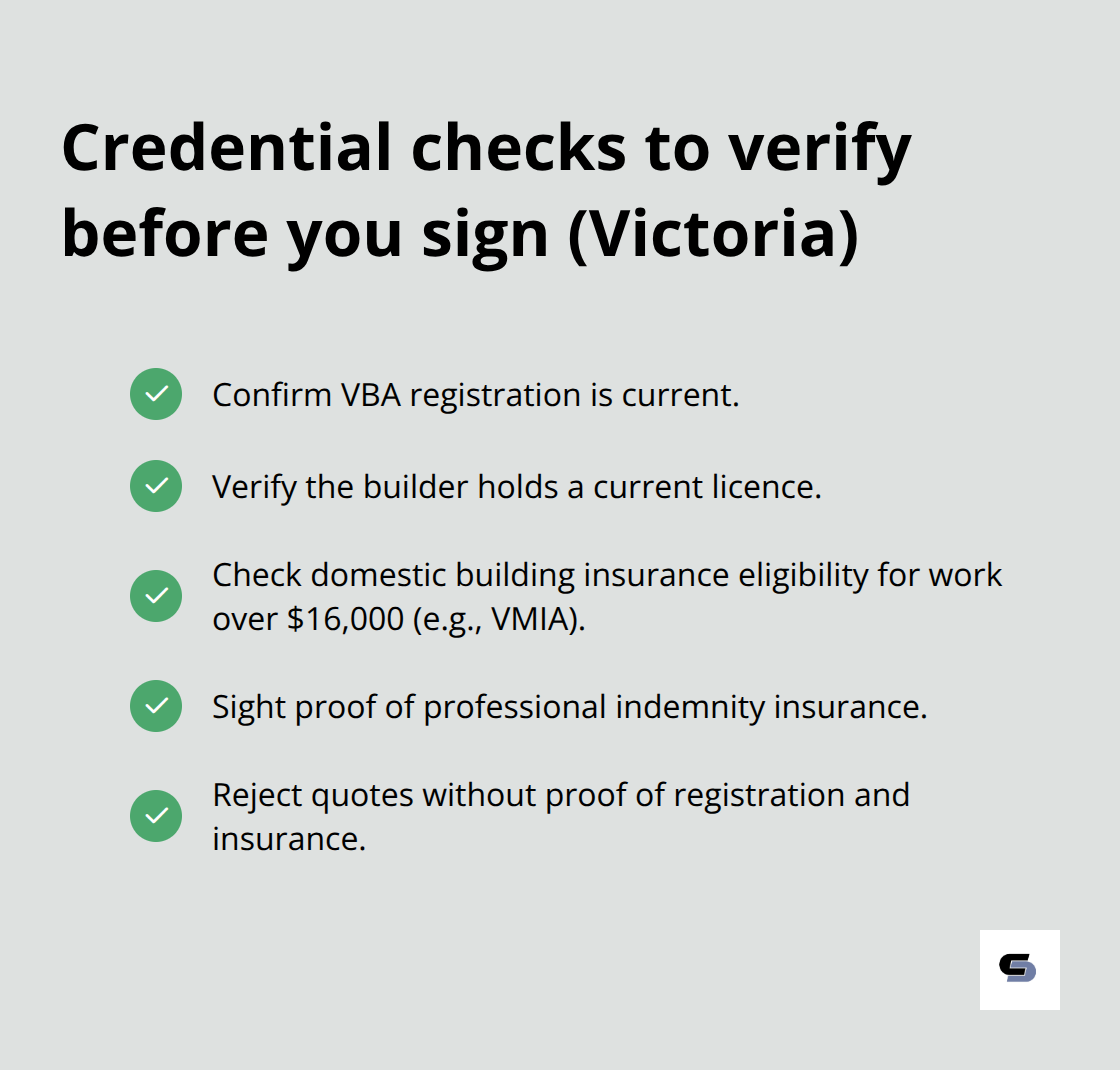
Extension builders who operate transparently welcome verification. Start by checking the Victorian Building Authority’s Building Practitioners registration to confirm your builder holds a current licence. This step eliminates unlicensed operators immediately. Licensed builders must meet strict competency requirements and maintain professional indemnity insurance, which protects you if defects emerge after handover. Only registered builders can enter major domestic building contracts and obtain domestic building insurance, which is required for work over $16,000 through providers like VMIA. Verify insurance eligibility directly with VMIA or another provider before signing anything. A builder who cannot produce proof of current registration and valid insurance is not worth considering, regardless of how competitive their quote appears.
Request and Contact References
Request references from three to five recent projects in your suburb or postcode, then contact those homeowners directly. Ask specifically about whether the builder met the fixed price commitment, completed on schedule, and responded promptly to site issues. Ask builders for examples of how they handled unforeseen conditions on previous projects. This reveals whether they absorb reasonable costs or immediately demand variations. Builders with established portfolios in double storey extensions or ground floor additions across Melbourne’s varied councils demonstrate genuine experience navigating local approval processes and site complexities.
Demand a Detailed Scope of Work
Your contract must specify exactly what work is included and what triggers a cost variation. Demand a detailed scope of work that references your approved architectural plans and building specifications section by section. The contract should itemise labour costs separately from material costs and clearly identify which elements are fixed and which remain variable, such as prime cost selections or provisional sum contingencies. A builder who refuses to provide this level of detail is either incompetent or deliberately vague to justify later charges.
Require Complete Contract Documentation
The contract must include the effective date, start and finish dates, the variation process requiring written approval before work proceeds, insurance and warranty details, and cancellation terms. Extension builders across Melbourne encounter similar conditions repeatedly-unsuitable soil, outdated services, heritage considerations-so experienced builders price these factors confidently. If a builder claims they cannot forecast costs accurately, they lack the experience or systems to deliver fixed pricing reliably.
Protect Yourself with Site Documentation
Homeowners should not pay extra for foundation issues the builder should have identified from foundation data available before quoting. Request and review all site documentation upfront so the builder prices accurately. A fixed price contract protects you only when both parties understand precisely what is being built and the builder has priced accordingly. This clarity prevents disputes and separates trustworthy builders from those who use vague contracts to justify surprise invoices. Once you’ve verified credentials and locked in transparent pricing, the next critical step involves understanding how your contract protects you when unexpected site conditions emerge during construction.
What Fixed Price Contracts Actually Protect
A fixed price contract protects you only when the builder has priced every component accurately and taken responsibility for conditions they should have identified beforehand. The contract must separate fixed elements from variable ones explicitly. Labour costs, builder’s overhead, and profit margins stay locked regardless of material price fluctuations or market changes. Prime cost items-materials you select like tiles, fixtures, or appliances-and provisional sums for genuine contingencies remain adjustable, but the contract must state the process clearly. When a builder quotes a fixed price without this breakdown, they’ve either underestimated dramatically or plan to recoup losses through variation claims later.
Extension projects across Melbourne regularly uncover unsuitable soil, outdated electrical systems, or structural complications that emerge during excavation or demolition. Your contract should specify which conditions the builder absorbs and which trigger legitimate variations. Homeowners should not pay extra for foundation issues the builder should have identified from foundation data available before quoting. A responsible builder reviews site documentation, soil reports, and existing structural information before providing a fixed price, then assumes financial responsibility for predictable problems. If unforeseen conditions genuinely emerge-asbestos discovered in unexpected locations, underground services not marked on council records-the contract defines how costs are shared and requires written variation approval before work proceeds, not invoices after the fact.
Timeline Accountability Prevents Indefinite Delays
Your contract must specify the start date, finish date, and reasonable delay allowances for circumstances beyond the builder’s control. The Domestic Building Contracts Act 1995 requires extension contracts to include allocated days for inclement weather, public holidays, and approved breaks. Without these provisions, builders can claim delays indefinitely without penalty. A fixed price contract loses its value if completion drags on for months-your carrying costs, interim accommodation, and disruption compound while the builder profits from the extended timeline.
Demand that your contract specify fixed completion deadlines with clear consequences if milestones slip. If delays occur beyond allocated weather days or public holidays, the builder must provide written explanation within 15 business days of the delay ending, stating the reason and requested extension length. You then have 10 days to accept, dispute, or negotiate a shorter extension.
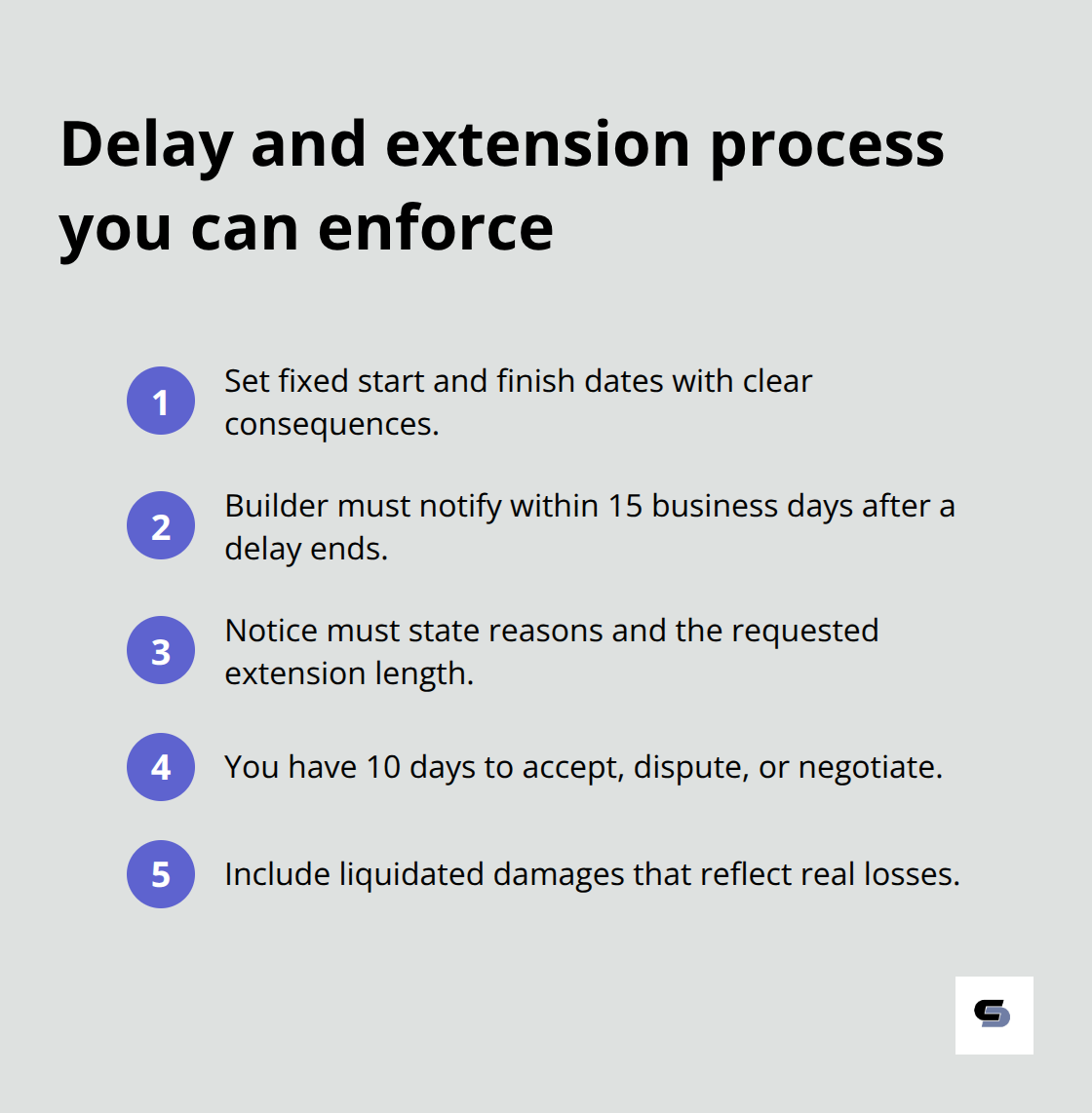
This structured process prevents vague excuses and forces accountability. Liquidated damages clauses-pre-agreed compensation for delays-should reflect genuine losses you’d incur, such as temporary accommodation costs or rental property income. Seek legal advice when drafting these clauses to ensure they’re reasonable estimates rather than penalties.
Licensed builders with established track records in double storey extensions or ground floor additions across Melbourne’s varied councils understand typical timelines because they’ve completed similar projects repeatedly. If a builder cannot commit to specific completion dates with clear delay provisions, question whether they’ve actually managed projects of this complexity before.
Quality Standards and Defect Accountability
Fixed price contracts must reference the National Construction Code 2022 and Australian Standards relevant to your extension, requiring the builder to meet these standards regardless of cost pressures. When a builder locks in fixed pricing, they cannot cut corners on materials or workmanship to protect their margin. Your contract should specify inspection points-foundation completion, framing inspection, pre-handover inspection-where you retain the right to visit the site and verify work meets specifications.
The Building and Plumbing Commission licenses registered builders and conducts investigations into defective work, providing recourse if your builder delivers substandard results. Consumer Affairs Victoria advises keeping thorough photographic records throughout construction, which strengthens warranty claims if defects emerge after handover. A fixed price contract with detailed specifications and inspection rights creates accountability because the builder cannot claim they’ve met their obligation when work deviates from agreed standards.
Final Thoughts
Fixed price contracts eliminate the financial uncertainty that derails most home extension projects. When you lock in transparent pricing with a licensed builder who itemises every cost component, you remove the primary source of conflict between homeowners and builders. You know your total investment before construction begins, you understand which conditions trigger legitimate variations, and you have clear recourse if the builder fails to meet agreed standards or timelines.
Extension builders worth trusting welcome verification of their credentials, provide detailed scope documents, and commit to specific completion dates with realistic delay allowances. They’ve completed enough projects to forecast costs accurately and understand Melbourne’s varied council requirements, soil conditions, and building complexities. They price fixed contracts confidently because they’ve absorbed similar site conditions repeatedly and know how to manage them efficiently.
When you choose extension builders who stand behind their work with detailed contracts and professional credentials, you secure peace of mind and protect one of your largest financial assets. Contact Cameron Construction to discuss your project and experience transparent fixed pricing backed by professional accountability.


![Heritage Extensions That Respect Original Character [Guide]](https://www.cameronconstruction.com.au/wp-content/uploads/emplibot/heritage-extensions-hero-1772691912-150x150.webp)