Contemporary Townhouse Extensions Melbourne: Modern Solutions for Compact Spaces
Melbourne townhouses offer excellent value, but their compact footprints leave little room for growth. Adding a second storey or expanding ground floor space transforms these properties into homes that work harder for your family.
At Cameron Construction, we’ve guided hundreds of homeowners through contemporary townhouse extensions in Melbourne. The right design strategy unlocks potential you didn’t know existed, without fighting impossible council restrictions or blowing your budget.
Why Townhouses Need Smart Extension Solutions
Melbourne’s townhouses typically range from 150 to 220 square metres, according to Domain Group data, yet families today need 30 to 40 per cent more living space than previous generations. Ground floor living areas often max out at 30 to 40 square metres, forcing homeowners to choose between cramped kitchens, tiny lounges, or relocating entirely. The cost to buy a three-bedroom house in established Melbourne suburbs averages $850,000 to $1.2 million, making extensions far more economical than moving. A second storey addition costs between $150,000 and $300,000 depending on your suburb and specifications, yet adds $200,000 to $350,000 in property value. This gap between extension cost and value uplift is why smart design matters-poor planning wastes money and locks you into poor layouts for decades.
Height Limits Shape What’s Possible
Melbourne’s planning framework typically allows townhouses up to 10 metres in height on sloping sites where the cross-slope exceeds 2.5 degrees, according to Planning Practice Note 27. This rigid constraint means you cannot simply stack a full second storey on every property. Sloping blocks in suburbs like Northcote, Thornbury and Coburg offer genuine second storey potential because the slope gives you extra headroom, but flat sites in Fitzroy, South Yarra and Collingwood force you to choose between a modest upper level or smart ground floor expansion. Understanding your site’s topography before hiring an architect saves thousands in wasted design fees. A soil report and site survey cost $800 to $1,500 but reveal whether your block slopes enough to unlock a full two-storey extension or whether ground floor expansion is your smarter path.
Site Coverage and Outdoor Space Rules
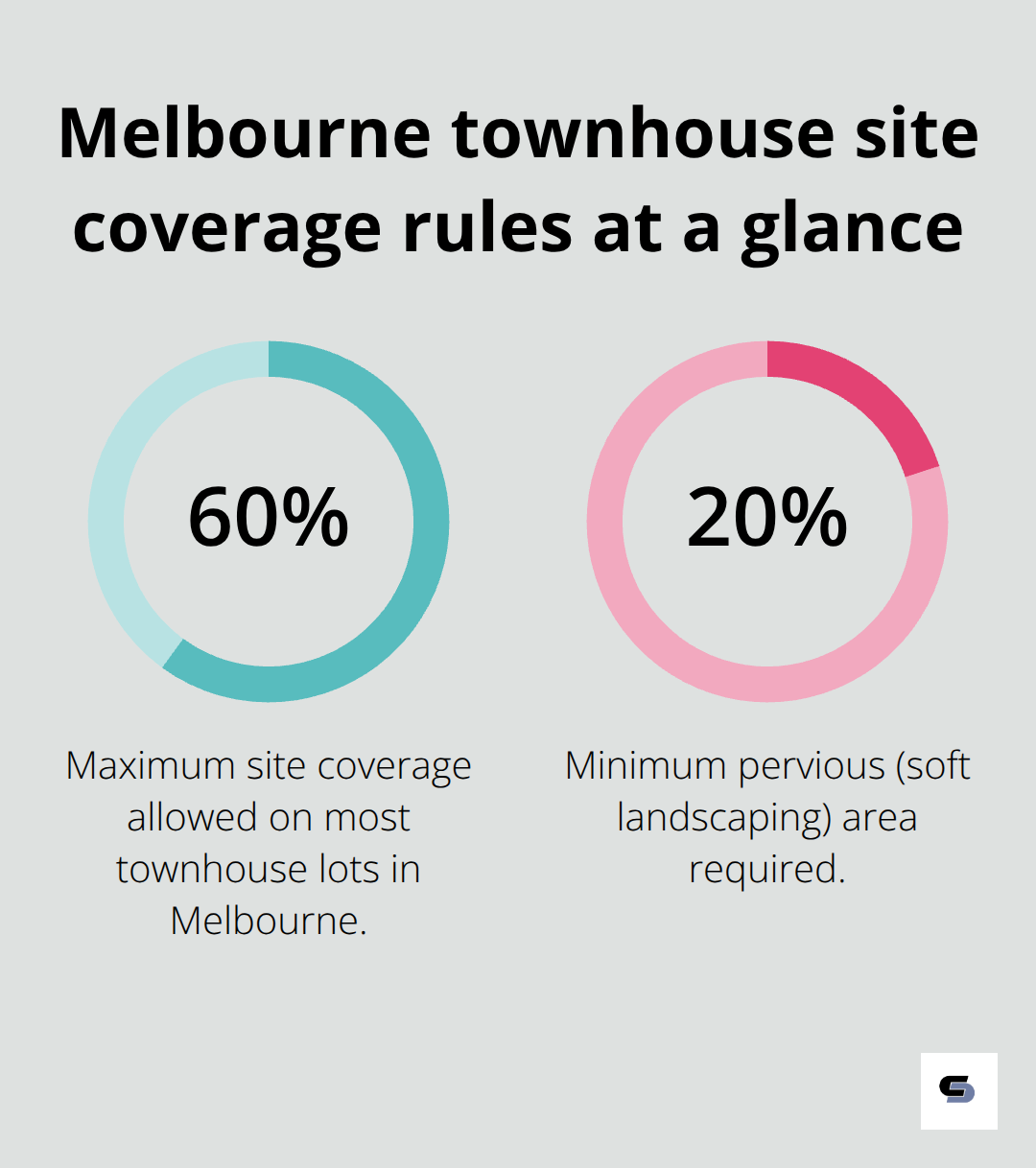
Your townhouse cannot exceed 60 per cent site coverage under most Melbourne zones, and at least 20 per cent must remain pervious (soft landscaping), per Planning Practice Note 27. This means a 300 square metre block allows only 180 square metres of building footprint. If your existing townhouse already occupies 140 square metres, you have just 40 square metres left for an extension-forcing you upward rather than outward. Ground floor rear extensions work only if your block depth permits setback compliance; many inner-Melbourne townhouses sit on narrow 8 to 10 metre deep blocks, making rear expansion impractical.
Second storey additions sidestep this constraint entirely because they sit above the existing footprint, respecting the 60 per cent rule without sacrificing outdoor amenity. These regulations shape your extension strategy from day one, so understanding them before you engage a designer prevents months of false starts and frustration.
How to Choose Between Going Up or Out
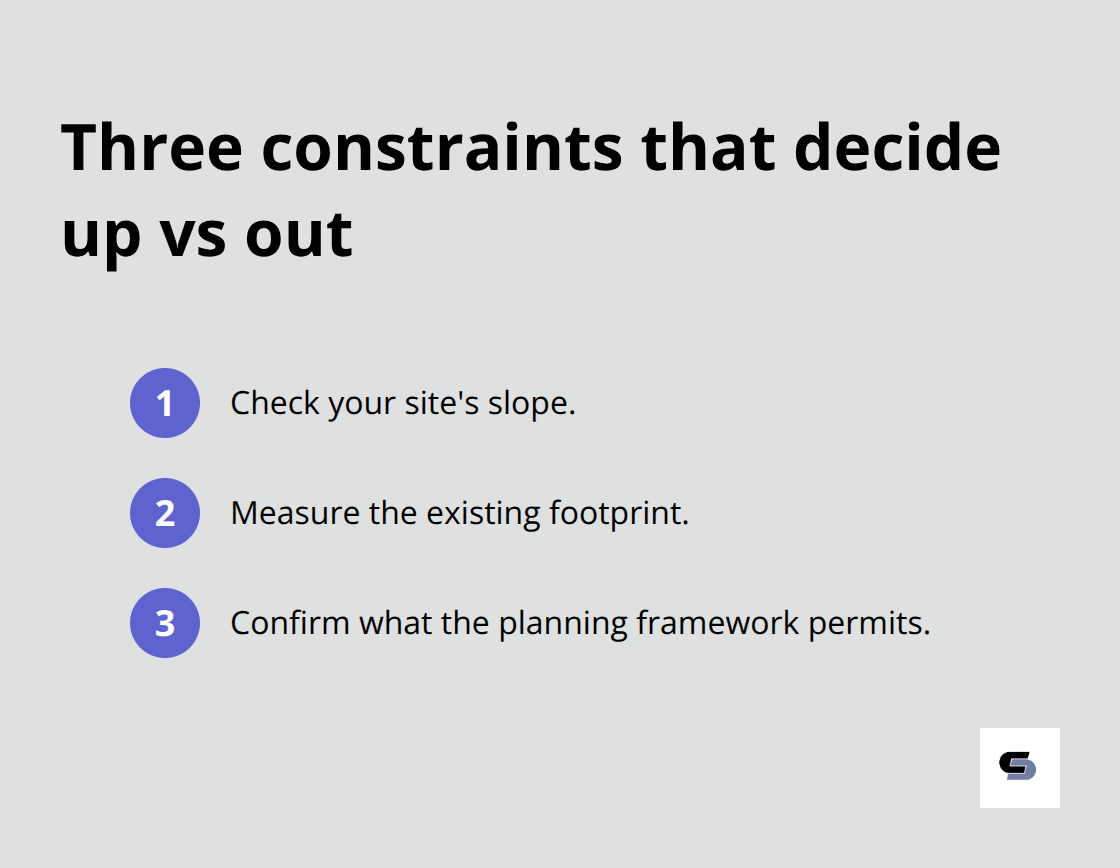
Second storey additions dominate townhouse extension conversations in Melbourne, but they aren’t always your best option. The choice between vertical and ground floor expansion depends on three hard constraints: your site’s slope, your existing footprint, and what the planning framework actually permits on your block. Flat sites in suburbs like South Yarra, Collingwood and Fitzroy struggle with second storey feasibility because you’re already bumping against height limits with just one level.
On these blocks, a rear ground floor extension of 3 to 5 metres delivers more usable space and costs 30 to 40 per cent less than a second storey. Sloping blocks in Thornbury, Northcote and Coburg are different-the natural slope gives you room to build upward without exceeding height limits, making a second storey addition the smarter investment. Homeowners often fixate on second storeys because they sound impressive, but the planning rules and site topography frequently point toward ground floor expansion as the faster, cheaper path to the space your family needs. A $2,000 site survey and contour plan reveals your block’s slope and settles this question before you spend money on concept designs that won’t get approval.
Ground Floor Rear Extensions Deliver Immediate Function
Rear extensions between 3 and 5 metres add 25 to 40 square metres of floor space and typically cost $35,000 to $60,000 depending on finishes and your suburb. This money goes directly into a new kitchen, dining or living zone that transforms how your family uses the ground floor. Melbourne’s planning framework requires rear setbacks based on height-a single storey extension needs just 1 metre clearance from the boundary in most zones, meaning you can push nearly to the back fence if your block depth permits. The real constraint is your existing townhouse depth: blocks narrower than 12 metres leave limited room for a functional extension plus outdoor space, which is why many inner-Melbourne townhouses max out at 3-metre extensions. Rear additions avoid second storey complexity-no new stairs, no upper-level structural work, no major roof redesign. A rear extension with new kitchen and living area typically takes 8 to 12 weeks to complete, compared to 16 to 24 weeks for a full second storey. If your block is narrow or your budget is tight, ground floor expansion delivers faster results and keeps you within the 60 per cent site coverage limit without sacrificing outdoor amenity.
Second Storey Additions Unlock Long-Term Value
Second storey additions cost $150,000 to $300,000 depending on scope and specifications, yet add $200,000 to $350,000 in property value across Melbourne’s established suburbs. This value uplift happens because a second storey converts a two-bedroom townhouse into a three or four-bedroom home, fundamentally reshaping the property’s market appeal. The planning process is stricter-you must satisfy daylight requirements for neighbours, maintain solar access to existing windows, and stay within height limits-but once approved, you gain 40 to 60 square metres of new floor space without consuming any additional ground footprint. Sloping blocks make second storeys genuinely feasible because the natural slope absorbs much of the visual bulk. A north-facing slope in suburbs like Coburg or Thornbury allows you to step the extension down the slope, creating a design that feels less imposing than a traditional two-storey addition. Second storey work demands structural engineering, new roof design, and careful integration with existing walls and foundations-this is why proper design and planning matter. Rushed second storey projects frequently exceed budgets because site-specific issues like poor soil conditions or existing structural defects emerge during construction. A soil report and foundation assessment before design starts costs $1,000 to $1,500 but prevents $20,000 to $50,000 in mid-project surprises.
Smart Layouts Squeeze Function Into Tight Spaces
Townhouse extensions succeed or fail based on layout, not size. A poorly designed 40-square-metre second storey wastes space on awkward corridors and undersized rooms, while a well-planned 25-square-metre rear extension flows seamlessly into daily living. Multi-functional spaces matter more in compact extensions than they do in large homes. A rear extension that combines kitchen, dining and living into one open zone eliminates wasted hallway space and makes the area feel larger than it actually is. Integrated storage-built-in joinery along walls, under-stair solutions, and overhead cabinetry-adds function without consuming floor area. Smart storage design costs 5 to 10 per cent more upfront but pays dividends in daily usability.
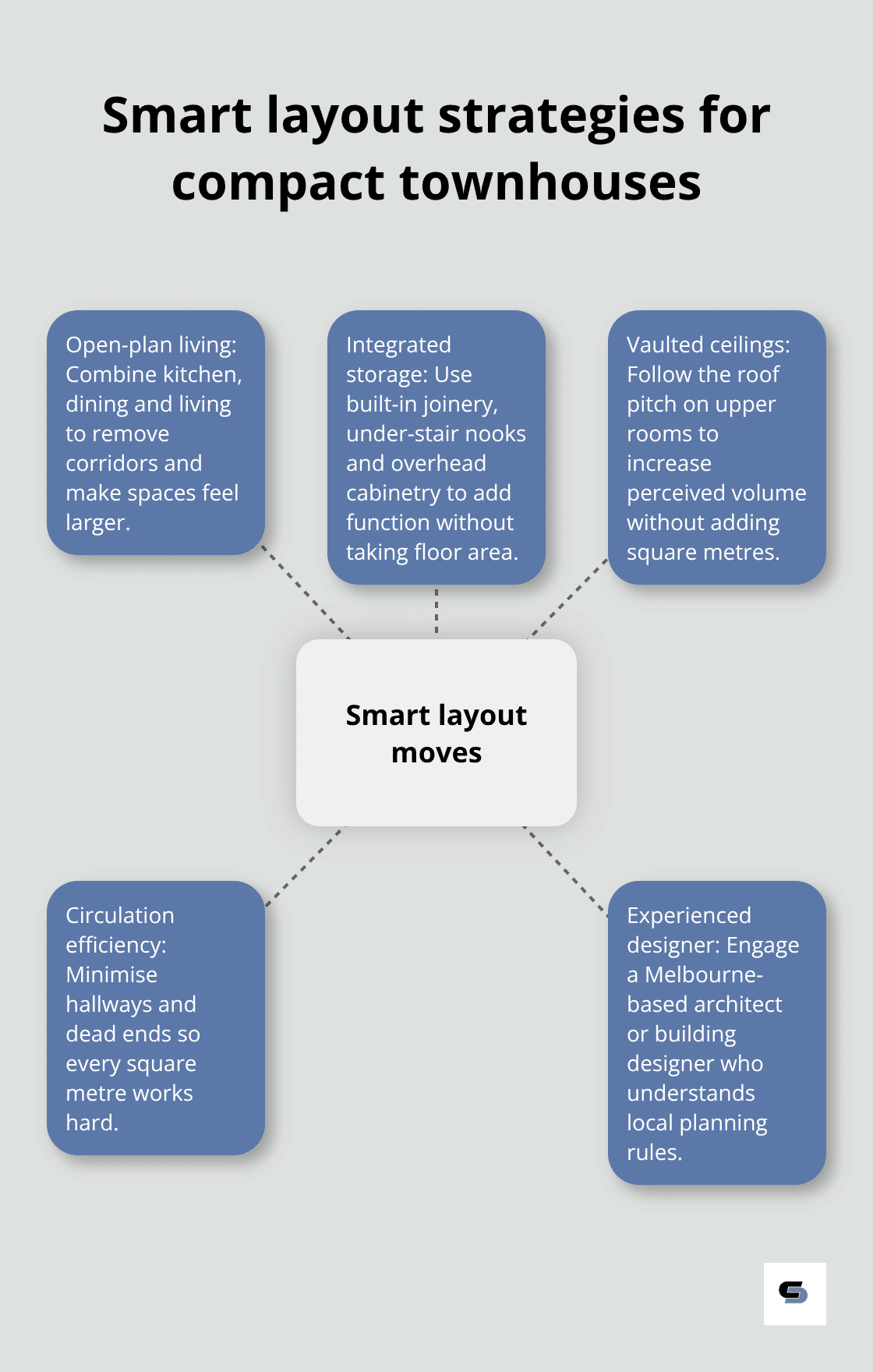
Second storey bedrooms on sloping blocks benefit from vaulted ceilings that follow the roof pitch, creating perceived spaciousness without adding square metres. A 3.5-metre-wide bedroom with a vaulted ceiling feels substantially larger than a 4-metre bedroom with a flat ceiling. These design moves require an experienced architect or building designer who understands townhouse constraints. Generic designs fail because they don’t account for Melbourne’s specific planning rules, site conditions and the spatial reality of compact blocks. The next chapter explores how Melbourne’s planning framework actually works and what approval process you’ll face once you’ve settled on your extension direction.
Getting Planning and Building Approval for Your Townhouse Extension
Melbourne’s planning system splits into two separate approval paths that most homeowners misunderstand until it’s too late. A planning permit from your local council confirms your extension complies with neighbourhood character, height limits, setbacks and site coverage rules. A building permit certifies structural safety, fire compliance, and adherence to the Building Code of Australia. Both are mandatory for any townhouse extension over $10,000, and you cannot start work until both permits are issued. Many homeowners assume one approval covers everything, then discover mid-project that their builder cannot proceed because the building permit has not yet been granted. The planning permit must come first-councils will not issue a building permit until planning approval is finalised. This two-stage process typically takes 8 to 16 weeks from submission to final approval, though complex applications in heritage areas can stretch to 24 weeks or beyond.
Understanding Your Council’s Planning Rules
Your local council’s planning scheme and practice notes dictate what is actually permissible on your block. Planning Practice Note 27 sets residential development standards across Victoria, including daylight requirements, setback formulas, height limits and site coverage caps, but your specific council may impose stricter controls through local planning overlays or neighbourhood character policies. South Yarra and Toorak councils apply heritage overlays that restrict extension heights and require designs sympathetic to existing streetscapes, adding 4 to 8 weeks to approval timelines. Collingwood and Fitzroy have similar constraints tied to neighbourhood character overlays.
A pre-lodgement meeting with your council costs nothing and reveals exactly what your site can and cannot accommodate before you commission design work. This single conversation prevents wasted design fees on schemes that will never gain approval. Your building surveyor or town planner attends on your behalf, presents your site plan and proposed scope, and receives written feedback on compliance pathways. Without this step, homeowners routinely invest $3,000 to $8,000 in concept designs that fail council assessment, forcing expensive redesigns or abandonment of the project entirely.
Heritage Overlays and Neighbourhood Character
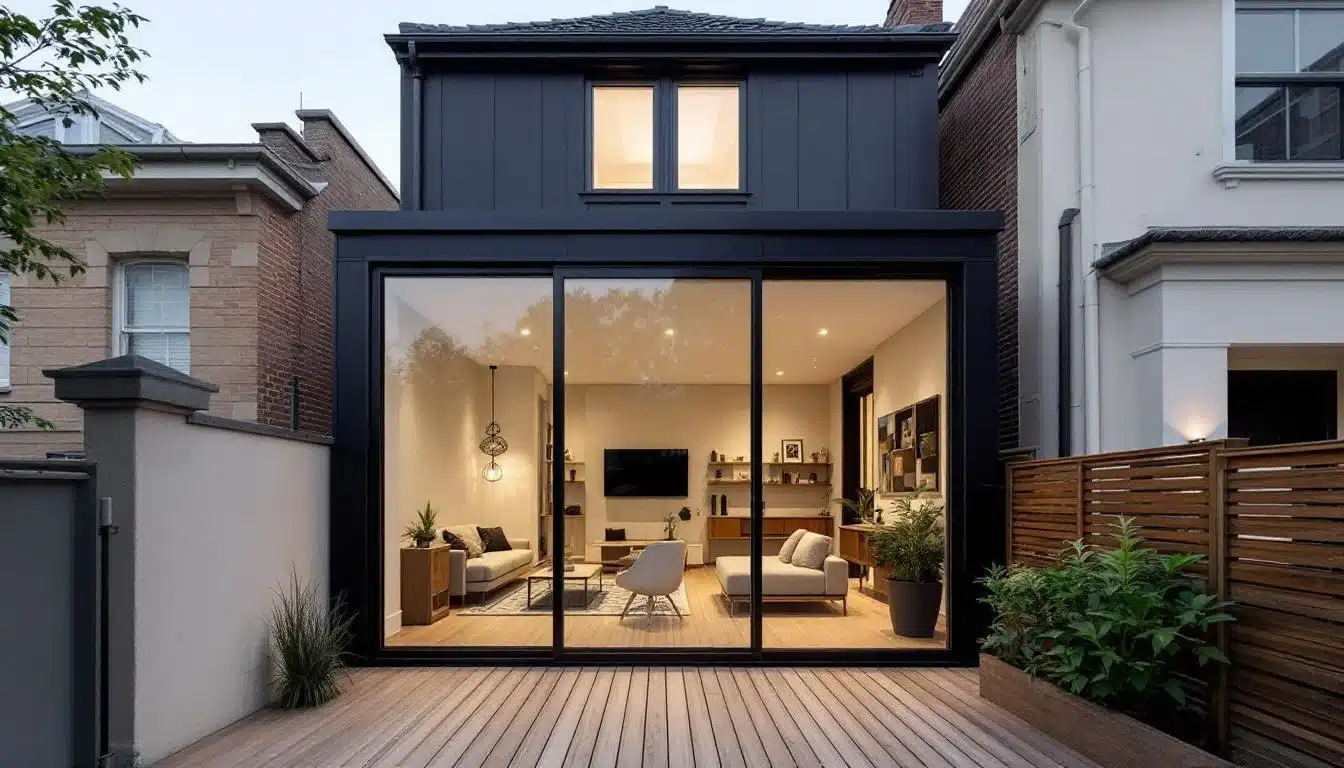
Heritage overlays and neighbourhood character controls shape what your extension can actually look like, not just its size. If your townhouse sits within a heritage precinct-common in inner suburbs like Fitzroy, Carlton, South Yarra and Collingwood-your extension must respond to the existing building’s architectural style and materials. This does not mean copying the original design; it means using compatible proportions, materials and detailing that sit comfortably alongside the heritage fabric. Modern materials like zinc cladding or large glass panels are absolutely permissible if they sit within appropriate setbacks and do not overwhelm the original streetscape.
Heritage Design Guides published by most inner-Melbourne councils provide specific guidance on what works and what does not. A second storey on a Victorian-era townhouse does not need to replicate Victorian detailing; it needs to sit back from the street boundary and use materials and proportions that acknowledge the original building’s scale. Setback requirements for heritage areas typically demand 1 to 2 metres more distance from the street than standard zones, pushing upper levels back and making them less visually prominent. This constraint actually forces better design because extensions sit more respectfully within the streetscape.
Non-heritage areas governed purely by neighbourhood character overlays offer more flexibility, but council still requires your extension to integrate with existing streetscape patterns, fence heights and building forms. The cost and timeline impact of heritage controls is real: a heritage-constrained second storey typically costs 10 to 15 per cent more due to material specificity and design complexity, and approval timelines extend by 4 to 6 weeks because councils apply stricter assessment criteria.
Calculating Approval Costs and Timelines
Building permit levies are calculated as a percentage of your total project cost, typically ranging from 0.15 to 0.30 per cent depending on your council and building value. A $250,000 second storey extension incurs a levy of $375 to $750. Planning application fees vary by council and project scope, ranging from $400 for minor works to $2,500 for complex multi-dwelling extensions. These are fixed costs regardless of approval outcome, so an unsuccessful application wastes money.
Total approval costs including surveyor fees, town planner engagement and council charges typically run $4,000 to $8,000 for straightforward extensions, rising to $12,000 to $18,000 for heritage or complex applications. Approval timelines matter directly to your construction schedule and cashflow. A standard 12-week approval process means your project cannot commence until week 12, pushing completion dates back by three months. Heritage applications routinely hit 20 to 24 weeks, delaying construction start by five to six months. This delay compounds if your builder has other commitments and cannot slot your project in immediately after permit issuance.
Planning your approval timeline backwards from your desired construction start date prevents costly schedule conflicts. If you need to begin work by September, applications must be lodged by May at the latest, accounting for 16-week processing. Most homeowners lodge applications in spring or early summer, creating council backlogs that push processing times toward the upper end of standard ranges.
Final Thoughts
Contemporary townhouse extensions in Melbourne succeed when you understand three non-negotiable realities: your site’s physical constraints, your council’s planning rules, and the cost-benefit trade-off between ground floor expansion and vertical addition. A $1,500 soil report and site survey reveals whether your block slopes enough for a second storey or whether ground floor expansion is your smarter path. A pre-lodgement council meeting costs nothing and prevents $5,000 in wasted design fees on schemes that will never gain approval.
Professional design and planning matter because townhouse extensions operate within tight constraints that generic approaches cannot navigate. Your extension must satisfy daylight requirements for neighbours, maintain solar access to existing windows, respect heritage overlays if your property sits within one, and stay within height and site coverage limits that vary by suburb and zone. A building designer or architect experienced in Melbourne’s planning framework knows these rules intimately and designs accordingly from day one.
Your next step is straightforward: commission a site survey and soil report, then book a pre-lodgement meeting with your council. These two actions cost under $3,000 combined and answer every fundamental question about what your townhouse extension can actually achieve. Once you have this clarity, you can engage a designer with confidence, knowing your project sits on solid ground rather than speculation, and contact our team to discuss your contemporary townhouse extension plans.