Concept to Completion Renovation Services for Melbourne Home Extensions
Home extensions and premium renovations require coordination across dozens of moving parts-from initial design through council approvals to final handover. Most Melbourne homeowners manage these phases separately, which creates gaps, delays, and unexpected costs.
At Cameron Construction, we’ve seen firsthand how concept to completion renovation services eliminate these problems by keeping everything under one roof. A single builder managing design, permits, and project delivery transforms a stressful process into a streamlined one.
What Concept to Completion Services Include
Design and Planning Phase
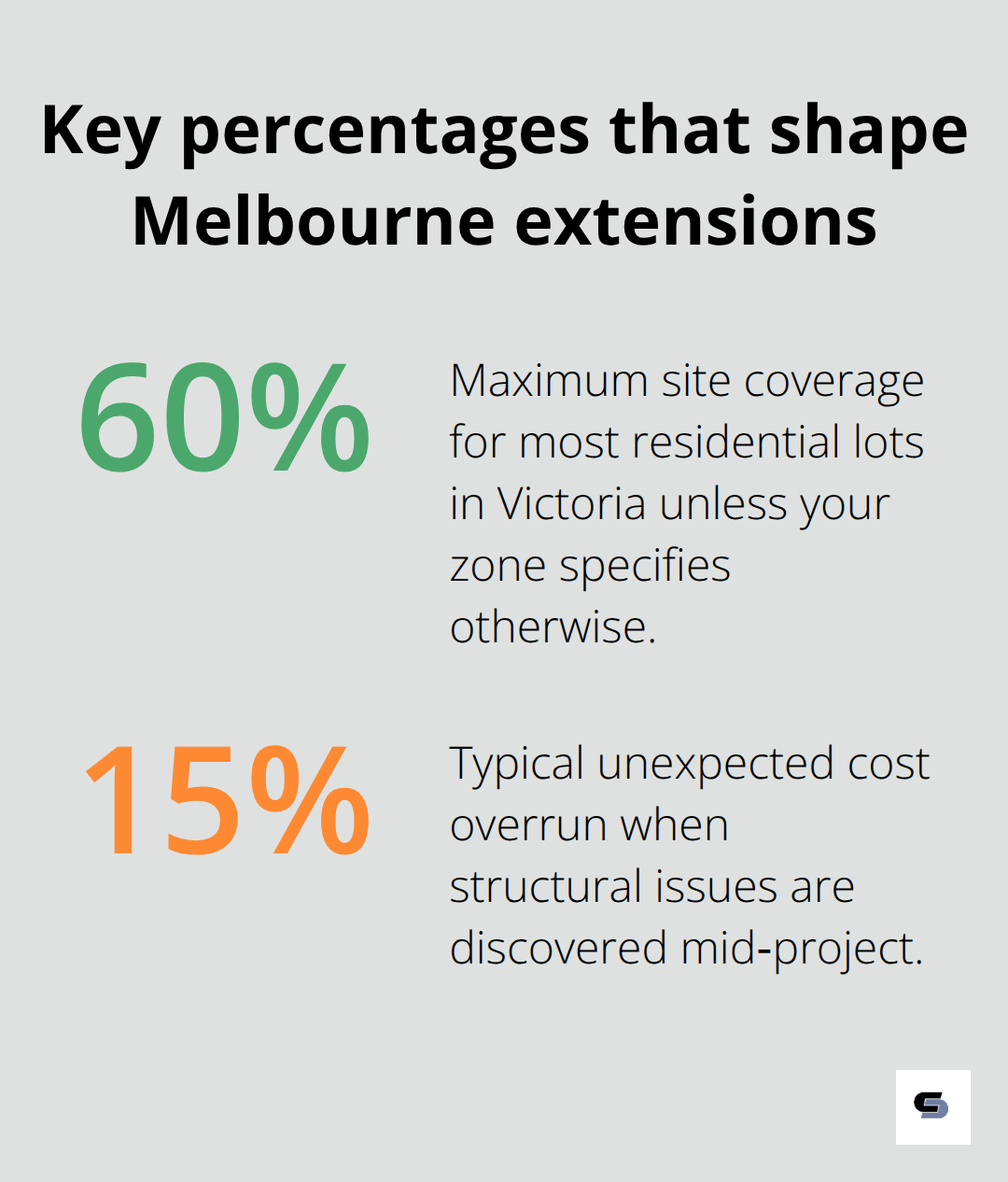
Melbourne homeowners face strict residential development standards that catch many off guard. Victoria’s Clauses 54 and 55 set measurable rules for setbacks, height, and site coverage that apply to most extensions. Front setback rules require extensions to sit at distances determined by neighbouring properties or fixed measurements depending on your zone. Site coverage cannot exceed 60% unless your zone specifies otherwise. Height typically caps at 9 metres, rising to 10 metres on sloping land.
Our in-house designers and engineers work directly with you to understand your functional needs, aesthetic preferences, and budget constraints. They produce detailed plans that comply with these standards from day one, avoiding the costly redesigns that happen when plans are submitted without this knowledge. This approach saves weeks and prevents the frustration of rejection letters from your local council.
Permits and Compliance Management
Most homeowners still coordinate approvals separately, creating delays that stretch timelines by weeks or months. We lodge planning applications with your local Melbourne council, manage heritage overlay assessments if applicable, and obtain building permits from a licensed building surveyor. The Domestic Building Contracts Act 1995 requires that any renovation over $10,000 must use a major domestic building contract and verify that your builder holds current registration with the Victorian Building and Plumbing Commission. We handle this verification and confirm all tradespeople-plumbers, electricians, gas fitters-hold appropriate licences before they arrive on site.
Project Management from Start to Finish
We coordinate every stage: foundation data collection, subcontractor scheduling, progress inspections, and staged payments that align with actual work completion rather than promises. This removes the risk of paying for incomplete work or discovering hidden structural issues mid-project that derail budgets. Your local council requires final inspections and occupancy permits before you can occupy the extended space, and we manage these handover requirements to completion.
The coordination across design, permits, and construction means decisions made early in planning directly influence what happens on site. Understanding this connection from the outset shapes how your extension performs and how smoothly the entire project flows.
Why Full-Service Partners Reduce Project Risk
Fragmented renovation projects fail because decisions made in isolation create downstream problems. When design, permits, and construction operate separately, a setback miscalculation in the design phase becomes a costly redesign during planning approval. A builder unfamiliar with heritage overlay requirements on your street submits applications that council rejects. Staged payments get locked into contracts without foundation data, leaving you exposed when soil conditions differ and costs spike mid-project.
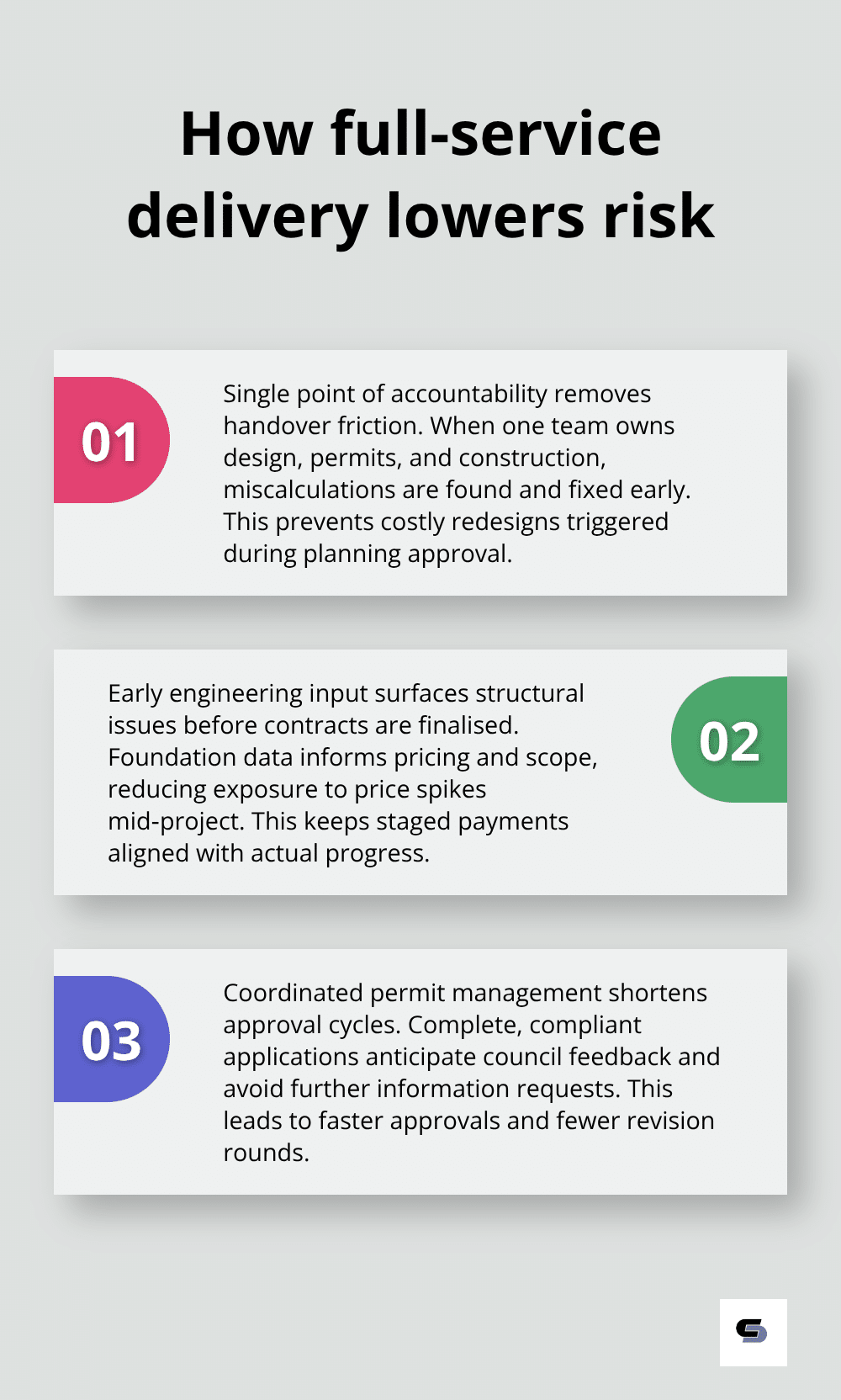
The Victorian Building Authority data shows that projects using major domestic building contracts with registered builders reduce disputes significantly, yet many homeowners still hire separate designers, then shop around for builders, then engage surveyors-creating misalignment at every handoff. A single point of accountability eliminates this friction entirely.
Structural Issues Stay Hidden Without Early Engineering Input
Discovering foundation problems or structural inadequacy mid-build is the fastest way to blow a budget. Foundation data collection and soil reports must happen before design is finalised, yet many builders only investigate after contracts are signed. This approach leaves you vulnerable to price variations that weren’t anticipated. In-house engineers assess site conditions alongside planning compliance from the outset, meaning your extension design already accounts for ground conditions, setback constraints, and building height limits. The Domestic Building Contracts Act 1995 protects homeowners through staged payment schedules, but protection only works if foundation data supports pricing from day one. Extensions on sloping blocks or heritage-listed properties require particularly careful early assessment because these sites trigger additional design constraints that affect cost and timeline. When one team manages this investigation and uses findings to shape both design and contract terms, you avoid surprises that derail projects by weeks or months. Homeowners who wait until construction starts to discover structural issues routinely face completion delays exceeding three months and unexpected costs exceeding 15% of the original budget.
Permit Coordination Determines Your Timeline
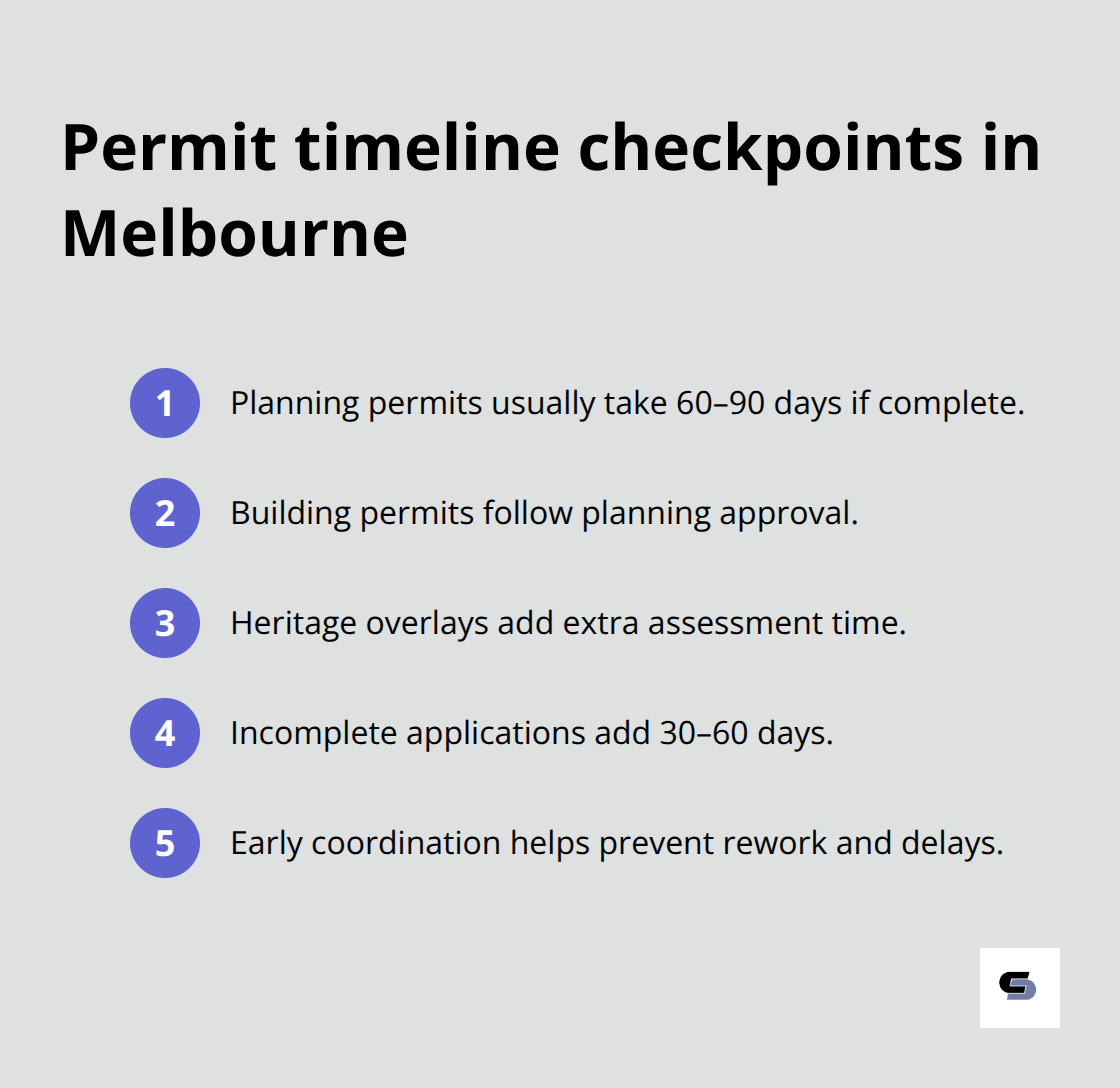
Melbourne’s planning system requires coordination across multiple approval stages, and timing matters. Planning permits typically take 60 to 90 days from submission, but only if applications are complete and comply with Clauses 54 and 55 from the outset. Building permits follow planning approval and require a licensed building surveyor. If your property sits in a heritage overlay, additional heritage assessments extend timelines further. Homeowners managing these separately often submit incomplete planning applications that council requests further information on, adding 30 to 60 days to approval timelines.
A builder managing permits from day one ensures applications are complete, includes required documentation, and anticipates council feedback based on experience with your specific local area. This coordination also flags early whether your design needs adjustment-better to discover that during planning than during construction. The cost of council rejection letters and redesigns is substantial; projects delayed by four months occur because initial plans fail to address overshadowing requirements or private open space standards. In-house project managers who work through Melbourne’s councils repeatedly know which documentation prevents delays and which design features trigger scrutiny. This experience translates directly into faster approvals and fewer revision cycles.
How to Choisethe Right Renovation Builder for Your Melbourne Home
The difference between a smooth extension and a delayed one often comes down to whether your builder understands Melbourne’s specific council requirements before design even starts. Many builders treat council compliance as a checkbox to tick during the approval phase rather than a foundation for the entire project. This approach causes problems. A builder unfamiliar with your local council’s interpretation of setback rules or heritage overlay requirements will design extensions that council rejects, forcing costly redesigns. The Domestic Building Contracts Act 1995 requires builders to register with the Victorian Building and Plumbing Commission, but registration alone does not guarantee someone knows how your local council applies Victoria’s residential development standards.
Assess Local Council Experience
When you interview potential builders, ask specifically about their recent projects in your suburb and which councils approved them. Request to see the planning approval documents from two or three completed extensions, not just photos of finished work. These documents reveal whether the builder anticipated council requirements correctly or submitted applications that required further information requests. Projects delayed by 30 to 60 days often stem from incomplete initial applications, and builders with genuine local experience avoid this trap.
Ask how many planning applications they submitted in your specific local government area in the last two years and what the approval timeline was for each. A builder who has completed multiple projects in your area and can name the specific setback requirements, heritage considerations, or zoning rules affecting your property demonstrates the depth of knowledge that prevents delays. Builders managing concept to completion services across design, permits, and construction carry the cost and timeline risk if applications fail, which creates stronger incentive to get approvals right the first time.
Verify Building Approvals and Structural Compliance
Request a list of recent projects with their building approval dates and final inspection certificates. This information tells you whether a builder actually completes projects to council standards or leaves clients managing final inspections themselves. The Victorian Building Authority requires final occupancy permits before you can use extended spaces, and many builders hand over incomplete paperwork that leaves homeowners liable for outstanding compliance issues.
Ask your potential builder for contact details of two clients whose extensions required foundation assessments or structural engineering, and ask those clients whether the builder collected soil reports before finalising the contract. Builders who delay this investigation until construction starts create pricing uncertainty that often becomes disputes. When interviewing builders, also confirm they maintain current certificates of domestic building insurance as required by the Domestic Building Contracts Act 1995 for projects over $10,000, and verify that all subcontractors including plumbers, electricians, and gas fitters hold current licences. Ask the builder to show you evidence of these licences before you sign anything. The Victorian Building and Plumbing Commission maintains searchable registers of licensed practitioners, and builders confident in their compliance will provide this verification proactively rather than treating it as an administrative burden.
Confirm In-House Design and Engineering Capabilities
Extensions designed without in-house engineering input often fail to account for site constraints that affect both cost and timeline. A builder who outsources design to external architects and then brings in separate engineers creates coordination gaps that delay approvals and increase costs. Ask whether your potential builder employs in-house designers and structural engineers or contracts these services externally. Builders with in-house teams can iterate designs based on site conditions, council feedback, and budget constraints without waiting for external consultants to respond. This speed matters during the planning phase when council requests modifications or when site investigations reveal conditions that require design adjustments.
Request to meet the specific designer and engineer who would work on your project rather than speaking only with a sales representative. Ask them to walk through how they would approach your specific site, what site investigations they would conduct before finalising design, and how they would address any heritage overlay or sloping block constraints your property has. A designer who can discuss your block’s orientation, existing trees, council setback calculations, and energy efficiency opportunities demonstrates genuine expertise rather than generic knowledge. Ask them to explain the trade-offs between different design approaches for your situation and why they recommend one over another. This conversation reveals whether they think strategically about your project or follow templates. Builders who employ in-house teams and manage full concept to completion services hold accountability for design quality, permit outcomes, and construction delivery in ways that builders assembling separate consultants do not.
Final Thoughts
Melbourne’s planning system rewards builders who understand local council requirements before design starts. Heritage overlays, setback calculations, and residential development standards vary by suburb and council, and builders with genuine local experience navigate these constraints efficiently. The cost of getting approvals wrong is substantial-rejected applications, redesigns, and timeline extensions routinely add months to projects. Concept to completion renovation services Melbourne homeowners choose carry this risk, which creates strong incentive to submit complete applications that council approves on the first submission.
Your extension’s success depends on early decisions about site conditions, design compliance, and contract terms. Foundation data collection before design finalisation prevents pricing surprises mid-project, while in-house design and engineering teams iterate quickly when council requests modifications or when site investigations reveal constraints. Staged payments aligned with actual work completion protect you from paying for incomplete work, and these practices are standard for builders managing full concept to completion services but fragmented projects often skip them entirely.
We at Cameron Construction have delivered award-winning home extensions and premium renovations across Melbourne for over 40 years, with in-house designers, engineers, and project managers handling every phase from initial concept through final handover. Contact Cameron Construction to discuss your specific site, local council requirements, and how we eliminate the coordination gaps that delay most projects.